Long Island, NY
The Places They Don’t Talk About
Texas. Kentucky. South Carolina. New York.
Over the years, Ruff House Rescue has scattered its operations across multiple, loosely supervised properties, all out of public view. Each one followed the same pattern: disturbing conditions behind the scenes and denial when the truth started to surface.
This isn’t about isolated incidents or bad luck. It’s about a system built to operate in the shadows—one that’s failed dogs across every zip code it touches. These locations show how deep the problem runs—and there are whispers of others we may never fully know.
The information presented here reflects our opinions and interpretations, based on public sources, firsthand accounts, and things that, frankly, were impossible to unsee.
We’ll start in Texas.
TEXAS- The Rescue Ranch
Ruff House Rescue bought land in Mission, Texas, in 2019. The idea was pitched as a game-changer: a fully equipped ranch to house dogs from local shelters before sending them to New York for adoption. Climate-controlled buildings. Play yards. On-site medical care. A safe place to rest.
That’s what people were told.
What actually happened was something else entirely.
Dogs began arriving in large numbers long before the ranch was ready. (Years later, it still wasn’t.)
Witnesses described devastating conditions: dogs chained to fences, others commingling. Dusty pens under tarps offered no relief from the southern heat. A failed drainage system turned the ground into a swamp of disease. With no shield from extreme weather—wind, rain, heat, and cold—the dogs suffered. Parvo, distemper, and heartworm ran rampant. In the heat, heartworm-infected dogs struggled to breathe. The sheer number of animals and lack of care made the cruelty inescapable.
Then came the reports no one wanted to believe: dogs were dying.
While the full death toll may never be known, the scale of neglect is undeniable. One source reported that over 100 dogs were buried on the property. Ruff House Rescue’s director allegedly wanted to discard the bodies as trash. An employee, unwilling to let that happen, instead burned their remains in a large pit.
Concrete flooring was poured. Photos of progress were posted. The director reportedly spent months on-site. But those familiar with the ranch say the core problems never went away. The dogs were still in crisis.
The facility failed inspections in 2020 and 2021. Weslaco Animal Shelter stopped releasing dogs to RHR after seeing conditions firsthand. In August 2022, the Hidalgo County Health Department ordered them to stop taking in animals. Yet the suffering continued.
Just three months earlier, in May 2022, Ruff House Rescue had secured a $745,000 deed of trust on the property—raising serious questions about how that money was spent, and why conditions remained so dire.
In March 2023, two mother dogs, Iowa and Toya, and their puppies were seized from the ranch by Animal Control and transferred to Palm Valley Animal Society. The mothers were infested with parasites and heartworm. The puppies were severely dehydrated, suffering from urine scalding, and lethargic. Four didn’t survive.
These were dogs who were supposed to be safe. How a facility barred from taking in animals ended up with litters of puppies is anyone’s guess—and exactly the kind of question that demands an answer.
After the seizure, a recorded call with the organization’s treasurer confirmed what was already known: the ranch was closed to intake. But by then, it was too late.
Donors thought they were funding a lifeline. They unknowingly helped fund neglect.
And the leadership of Ruff House Rescue failed the very animals they were entrusted to protect.
Ruff House Rescue still owns the property. Recent reports indicate that dogs remain on-site, though in reduced numbers due to the conditions, complaints, and enforcement actions detailed above.
Texas Files


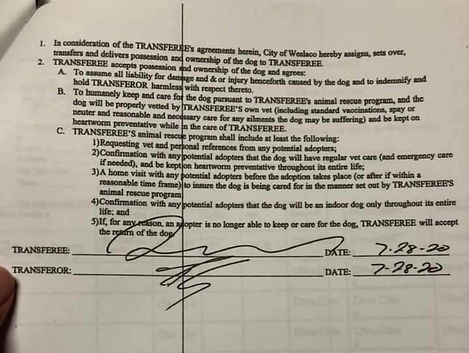


This isn’t rescue — it’s cruelty. The place is filthy, loud, and overcrowded. Dogs are forced to see and hear each other constantly, which is incredibly stressful. There are no barriers to prevent disease spread, no signs of proper care. This kind of environment causes dogs to mentally and physically break down. Rescue should heal — not harm. Click photos to enlarge and scroll through.


Info on Facebook (read replies too):
Texas Videos
Click videos to enlarge and scroll through.
Texas Ranch Comments
Texas Ranch Comments

TX RANCH Cathy

TX RANCH Diane
Texas Ranch After Concrete
Texas Ranch After Concrete

Texas Ranch Part 1

Texas Ranch Part 2

Texas Ranch Part 3
Texas Ranch- The Old Tarp City
Texas Ranch- The Old Tarp City

Texas Ranch Tarp City

They told the public what they wanted to hear. The dogs lived a different story.
KENTUCKY- The Hub
For more than eight years, Ruff House Rescue funneled dogs to a remote property in McCracken County, Kentucky—a hidden hub. Sick, scared, unwanted, or simply no longer convenient, they were shipped off without oversight. Without accountability.
This wasn’t a sanctuary. It wasn’t a place for healing. It was a dumping ground. A place to disappear dogs—not to save them.
The pipeline led to one man. A man with a known history of cruelty. Far from the public eye—and even farther from safety.
Volunteers who asked where the dogs were going were met with vague answers. Then, silence.
And then came April 2021—the moment the truth could no longer be buried.
What police discovered was horrifying: Over 100 animals living in squalor. No light. No ventilation. No electricity. No heat. Dogs were crammed into cages—starving, sick, and shut down. Cats were found dead. Livestock had been left to suffer in filth and neglect.
The man behind it? David Howery. In 2009, he was charged with 295 counts of animal cruelty. He was convicted. In 2021, when the raid happened, he was arrested again. The police had come to the property on an outstanding warrant.
He later pled guilty and was sentenced to just one year in jail.
But this wasn’t a single moment of failure. It was a revelation.
David wasn’t a stranger to Ruff House Rescue. Diane had known him for over a decade. He’d been working with the rescue for years—receiving dogs, again and again. At one point, he had even lived in Diane’s home in New York.
Volunteers were told to call him “Bill.” A fake name—almost certainly due to the warrant.
That’s how he appeared in records. That’s how this continued for years.
Imagine what these animals endured. Not just neglect—but erasure. Each one, a soul. A personality. A beating heart locked in the dark, starving, sick, and terrified. Waiting for help that never came. Waiting for love that never arrived.
Their cries were muffled by distance. By apathy. By a rescue that chose silence over transparency.
And when the truth finally came out—when the horror was undeniable—Diane didn’t condemn him. She said he “lives and breathes to help others.” Called him “an enigma.”
As if that could erase the horror unfolding under his watch.
Diane didn’t take responsibility. She deflected. Blamed “drama.” Blamed the media. Blamed a woman from Georgia. Anyone but herself.
Meanwhile, Guardians of Rescue—the group that stepped in to save the animals—had to publicly correct the record: “The organization who was responsible for the care of these dogs has made posts representing that Guardians has agreed to return these animals to them, and that we were protecting them. This statement is without merit.”
This wasn’t one mistake. It was a campaign of willful neglect. Sustained. Repeated. For years.
And it was funded—with donor dollars.
Let that sink in:
A convicted animal abuser wasn’t just entrusted with the most vulnerable lives—he was enabled, empowered, and funded by the very rescue claiming to protect them.
By someone who wants you to believe she is a rescuer.
So scroll through the photos. Watch the footage. Read Diane’s own words.
Then ask yourself:
What kind of rescue does this?
Kentucky Files


"Kentucky with Bill." Click on to see full image.


These articles cover David Howery’s arrests in 2009, 2021, and 2025. While we have no knowledge of any ongoing connection between Diane and David, we’re including the 2025 arrest as an important update.
Info from Facebook:
The more dogs they moved, the more praise they got.
Kentucky Videos
Click videos to enlarge and scroll through.
Kentucky
Kentucky

Howery interview

Howery Police Video A

Howery Police Video B

"We have broken limbs, we have respiratory issues, eye issues, several that are so emaciated that there's no muscle tone left," said Houchins. "They're having a hard time walking, standing, just from being starved."
Source: WPSD Local 6 News
"I hope and pray that when you see the images of the property and you see the images of the dogs that came from the Dave's literally just days ago that you will have an open mind instead of condemning."
Diane Indelicato on Facebook
S. CAROLINA- The Dirty Secret
Before the Kentucky raid. Before the Texas ranch. There was South Carolina.
It was supposed to be safe. Ruff House Rescue claimed their dogs were in foster homes, cared for and waiting to be transported to New York.
Then a volunteer stopped by to drop off supplies. What he found wasn’t a foster home. It was hell.
Filth. Fear. These weren’t strays or shelter dogs—they were RHR’s own. Dogs they said were rescued. Dogs meant to be healing.
Another volunteer drove all the way from New York to get them out. She couldn’t believe what she saw. No one could.
Diane Indelicato, RHR’s director, denied knowing anything.
Look at the photos. Watch the videos. This wasn’t where RHR found dogs.
It’s where they kept them.
Again, we ask—how does anyone who claims to rescue dogs let this happen?
South Carolina Pictures


South Carolina Videos
Click videos to enlarge and scroll through.
South Carolina
South Carolina

SC Video 1

SC Video 2

SC Video 3
ISLAND PARK, NY- Not the Ritz
For over a decade, Nassau County was Ruff House Rescue’s base of operations. They bounced from one town to the next—Rockville Centre, Oceanside, E. Rockaway, Freeport, Island Park—but the reality inside their buildings remained the same: operating without the necessary permits, overcrowding with too many dogs, and providing insufficient care.
These weren’t shelters. They were makeshift kennels hidden from view, packed with animals and run by a constantly changing crew of volunteers. During COVID, RHR used court delays to avoid vacating a property where they weren’t supposed to be warehousing dogs. Complaints kept coming. So did the dogs.
At one point, as many as 103 dogs were reportedly stuffed inside the Island Park location. Puppies. Seniors. Big dogs. All crammed into cages, day after day. Some lived like that for months—23 hours a day locked up, with very minimal walks, no playtime, no relief.
They sat in filth. They cried and fought through the bars. They lost hope.
And while the dogs suffered, the rats thrived. Infestations were constant. Volunteers told stories of chewed-through medical equipment, droppings in food storage, rodents darting across the floor. And the leadership? Instead of fixing the problem, there always seemed to be a justification. After all, according to Diane, this wasn’t the Ritz. But it’s not like the dogs were asking for silk sheets and foie gras—even so, the reality fell far short of the most basic shelter standards.
In 2022, the Town of Hempstead finally ordered them to leave the Island Park building. There were whispers they’d try to move to the house they had purchased in Freeport, but that plan was blocked—thanks in part to public pressure. After housing dogs on vans for 3 weeks, they made the move to West Islip, in Suffolk County, NY.
This wasn’t an accident. It wasn’t a rough patch. It was a pattern. Ruff House Rescue operated like this for years because they could. Because people trusted them. Because volunteers believed they were doing good.
But this wasn’t rescue. It was warehousing—painful, relentless confinement disguised as compassion. And it happened for far too long.
Note: Due to ongoing legal matters involving the West Islip location, we are not sharing details of what we’ve learned there at this time.
New York Files
Not at the Ritz:


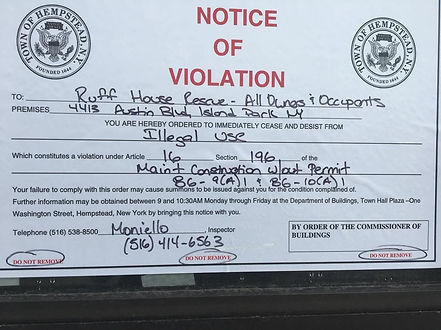


Instead of recognizing that they’re taking in more dogs than staff can reasonably care for, the approach has been to place more demands on volunteers.

Dogs, cats and...rats??? Oh my! (start from the bottom)


Click on an image to see the full size.


New York Video
Island Park, NY "Kennel"
Island Park, NY "Kennel"

Island Park NY

DISCLAIMER
Everything on this site reflects our opinions and interpretations, based on what we've seen, heard, and dug into ourselves. We’re not claiming to have the full story or to make legal accusations—we’re raising concerns we believe are worth paying attention to. While we aim for accuracy, nothing here should be taken as a proven fact. Bottom line: these are our views, and we’re putting them out there—loud enough to be heard over the attempts to silence us. [Read our full disclaimer here.]